Microfiber Cloth vs Cotton Cloth: Which Cleans Better for Which Job
Microfiber cloth vs cotton cloth is the first material decision most buyers face when they build a cleaning cloth or mop pad range. Choose badly and you ship a pad that smears glass, a cloth that sheds lint across a countertop, or a mop head that smells like a wet towel by day three. Say you are quoting a supermarket chain on its own-label cleaning aisle. Both materials look identical in a product photo. They behave nothing alike in a bucket.
Here is the buyer's version of that comparison, and what it means for the specs you write and the stock you hold. We supply both cleaning cloths and mops, so we have no reason to push you toward one fibre.
What microfiber actually is
Microfiber is synthetic, normally polyester blended with polyamide. The Wikipedia entry on microfiber defines it as fibre finer than one denier, less than ten micrometres across. That thinness is the whole trick. A gram of microfiber holds far more filaments than a gram of cotton, so the cloth has more working edges per square centimetre to scrape soil off a surface.
Good pads use split microfiber: polyester and polyamide are spun together, then treated so the two polymers separate into wedges. Each original filament becomes a bundle of thin blades. Grease clings to those blades, and the gaps between them hold water by capillary action. Note that polyester on its own is water-shy. Microfiber absorbs because of its structure, not its chemistry.
What cotton actually is
Cotton is a natural cellulose fibre, and the Wikipedia article on cotton describes it as nearly pure cellulose, soft, breathable and strongly absorbent. Each fibre is a flattened tube, so cotton takes water inside the fibre as well as between fibres. That is why a cotton yarn mop feels heavy and wet in the hand. It is also why it releases that water more slowly onto the floor than a flat pad does.
Cotton is not fussy. It survives hot washing, takes chlorine bleach, and does not care much about drying temperature. What it gives you is lint. Short fibres work loose in use and in the wash, and they land on your customer's glassware.
Head to head
| Job or property | Microfiber | Cotton | Why |
|---|---|---|---|
| Glass, mirrors, stainless steel | Better | Risky | No lint, and it lifts greasy film instead of smearing it |
| Kitchen degreasing | Better | Pushes oil around | Split blades scrape the film off hard surfaces |
| Wet mopping with plenty of water | Damp work only | Better | Cotton holds more water by weight and releases it steadily |
| Rough concrete and outdoor areas | Snags and shreds | Better | Twisted yarn rides over grit without tearing |
| Fine dust and pet hair | Better | Loses grip when damp | Static and capillary pull do the collecting |
| Hot wash and bleach | Shortens pad life | Tolerates it | Polyamide does not enjoy repeated hot bleach washes |
| Drying time | Fast | Slow | Thin synthetic filaments release water quickly |
| Lint on the pack | Low | Can shed | Short staple fibres escape in use and washing |
| End of life story | Synthetic, not biodegradable | Cellulose based | Affects what you can print on the pack |
Where microfiber wins
Glass, mirrors, stainless steel and glossy worktops. A damp microfiber cloth with plain water lifts greasy fingerprints without a chemical and leaves no fibre behind. That is why so many flat mops and window kits ship with a microfiber pad.
Kitchen degreasing, too. Split microfiber grabs the oil film on cabinet doors and range hoods that a cotton cloth just moves around.
Fine dust and pet hair on sealed floors. The same pull that grabs dust is why our electrostatic duster uses split-tip synthetic fibres rather than cotton.
Weight and drying. A microfiber pad is light, dries quickly on a hook or on low heat, and goes back into service the same day. In a hotel or restaurant laundry loop that matters more than the fibre price.
Damp mopping sealed wood, laminate and tile, where the instruction on the bottle is damp, not wet. A flat microfiber pad gives you control over how much water reaches the floor.
Where cotton wins
Big spills and rough floors. Cotton yarn holds a lot of water by weight and it does not care about grit. A yarn mop on a concrete shop floor or a factory aisle keeps working where a thin pad would snag.
Hot water and bleach. Food service, clinics and contract cleaners wash hard and wash often. Cotton takes that regime better than any polyamide blend does.
Natural fibre positioning. Some markets and some private-label programmes sell the cotton story: cellulose, biodegradable, familiar. It is an easier line on a pack than polyester and polyamide.
Price at entry level. Cotton yarn is cheap to spin into a head, and a 4-ply mop is one of the lowest cost ways to put a wet mop on a shelf.
The laundering question that decides returns
Fabric softener destroys microfiber. Softener coats the split fibres with a film, the blades stop grabbing, and the cloth becomes an expensive rag. If you print wash instructions on the pack, say it plainly: wash warm, skip softener, skip bleach, dry low or air dry.
Cotton goes the other way. It takes abuse, but it shrinks and it sheds. Specify a cotton pad or yarn mop and you need to decide up front how much shrinkage is acceptable after repeated washing. Test it before the pack copy is printed.
None of this is about one fibre being better. The wash regime your end customer will actually follow is a spec input, not an afterthought.
What we can supply, and where the two meet
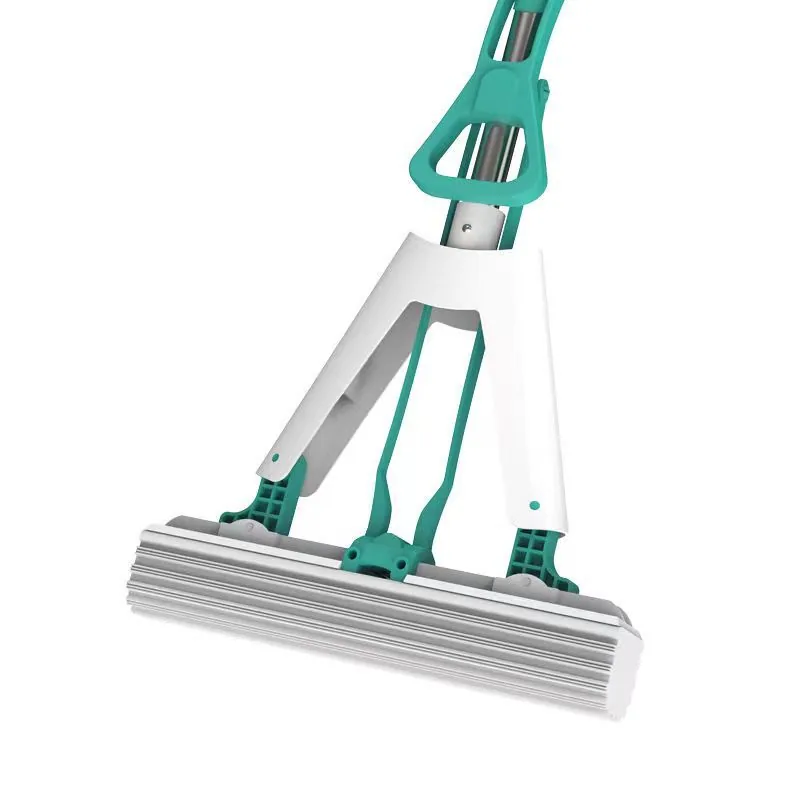
Our mop head options cover both sides of the argument: 80/20 polyester-polyamide microfiber flat pads, chenille microfiber, 4-ply and 8-ply cotton yarn, and PVA sponge heads that soften in water. The sponge article is a fair primer on why that last type behaves so differently again. Buyers who need an eco line can ask about our recycled cotton fibre option and PCR plastic parts.
Ply is not a marketing label. It is how many cotton yarns are twisted together. An 8-ply head is heavier, more absorbent and longer lasting under contract cleaning. A 4-ply head is lighter and cheaper, and suits household retail where the mop comes out a few times a week.
Durability sits outside the fibre debate. Our products must pass a drop test before they leave the factory, and handles use reinforced stainless steel or aluminium with 0.4 to 0.6 mm wall thickness. Buyers notice when a mop arrives bent.
How to split the range
Most buyers we work with do not pick a winner. They build a short ladder:
- Entry wet mop: 4-ply cotton yarn head, low price point, household retail.
- Contract wet mop: 8-ply cotton yarn, heavier head, sold through janitorial channels.
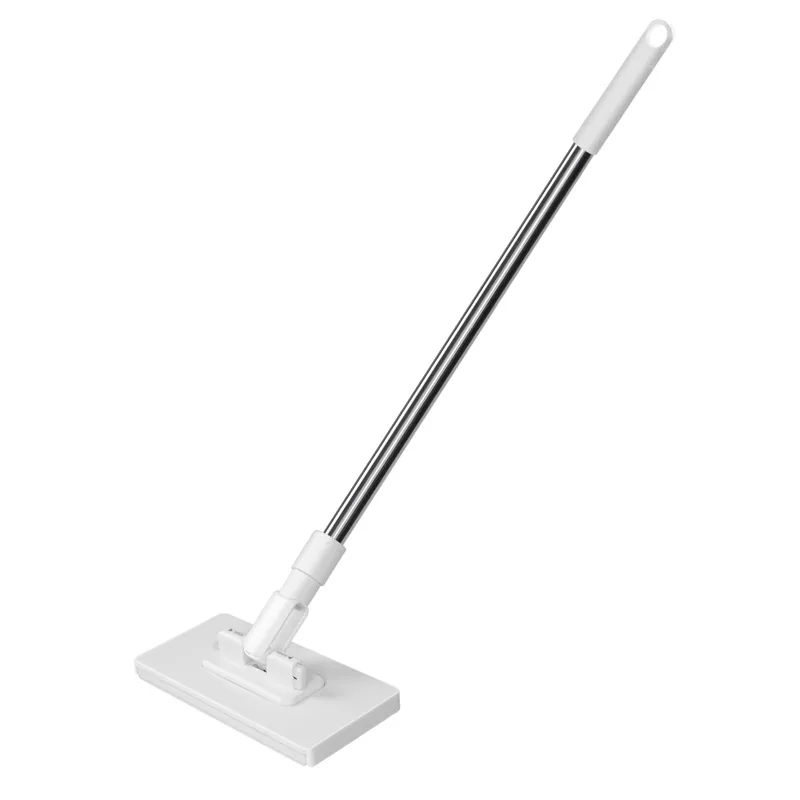
- Everyday flat or spin mop: 80/20 microfiber pad.
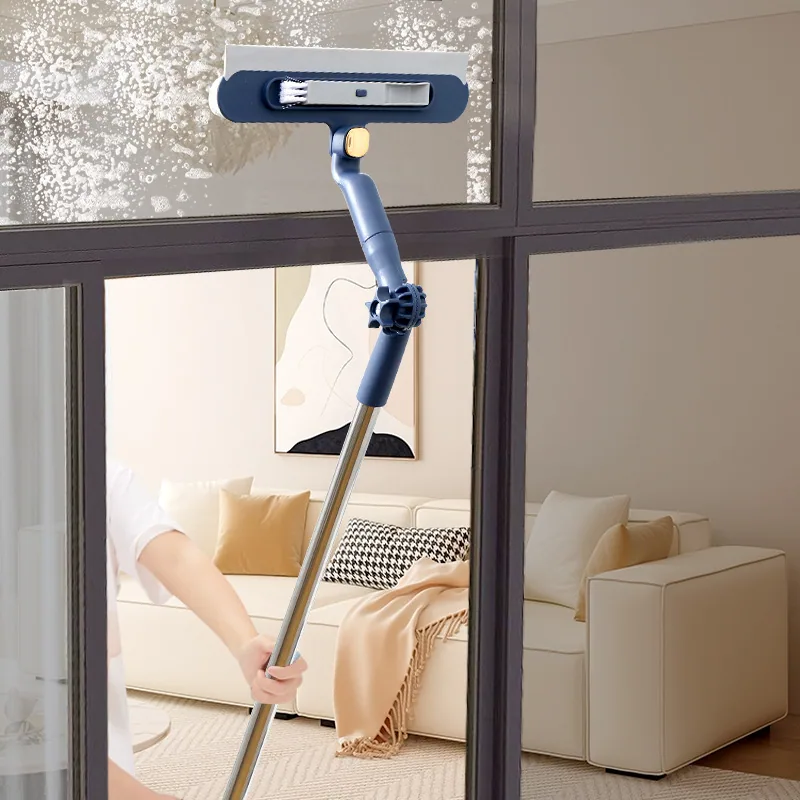
- Window and glass kit: microfiber cloth plus a squeegee.
- Degreasing and dusting cloths: split microfiber, packed as multipacks.
- Eco line: recycled cotton fibre head with PCR plastic parts.
Two rules save trouble later. Match the cloth to the surface you claim on the pack, so a glass cloth is sold as a glass cloth. And settle the wash story before the colour story, because returns usually come from a pad that stopped working, not from a shade that looked better on screen.
What this means for your spec sheet
Write the fibre, the construction and the job. Microfiber is not one product: pad weight, pile height and the polyester to polyamide ratio all change how it performs. Cotton is not one product either: 4-ply and 8-ply behave like different tools to the person holding the handle.
For OEM work, mop head material, brush bristle stiffness and broom handle length can all be adjusted for a market. Colours match Pantone codes or your own samples, and logos go on by embroidery, silk print or heat print. A pre-production sample is confirmed before mass production, which is the point where a wrong fibre decision is still cheap to fix.
How to start an order with us
Zhejiang Chuangjie Commodity Co., Ltd., trading under the Mopglo product brand, has been based in Yiwu, Zhejiang since 2006. Our showroom in Yiwu International Trade City covers more than 200 square metres, and the range now runs past 3,000 SKUs across mops, brooms, brushes, rags, trash cans and window cleaners. Production runs on more than 300 injection moulding machines, with annual output over 5 million units sold into 20+ countries.
Two ways in. Pick stock items from the catalogue, where each listing carries its own minimum order, and we consolidate everything in Yiwu before export. Or go OEM: 2,000 to 8,000 pieces per style per colour, order confirmed and deposit paid, then you send colour samples or Pantone codes plus logo files, and the factory customises colour, material and style before the sample stage. Full details sit on our OEM and ODM page.
Email mopglohome@gmail.com with the items and quantities, or send the quote form. Tell us the surface you are selling against and we will tell you which fibre we would put on the pack.
FAQ
Microfiber cloth vs cotton cloth for mopping, which should I stock?
Follow the wetness. For damp mopping sealed floors, glass and grease, stock microfiber. For wet mopping with plenty of water, rough floors and hot-wash contract use, stock cotton yarn, with 4-ply for household retail and 8-ply for janitorial channels.
Does microfiber really clean better than cotton?
Not everywhere. Split microfiber wins on glass, stainless steel, greasy kitchen surfaces and fine dust because the thin filaments give more scraping edges and no lint. Cotton wins on heavy spills, rough ground and any routine that involves hot water and bleach. Most ranges need both.
Can we buy microfiber pads and cotton yarn mops in one order?
Yes. One-stop procurement covers about 3,000 items, with quality inspection, warehousing and consolidation in Yiwu, then export customs clearance and FCL or LCL shipment. Stock items keep the minimum shown on their own listing. OEM orders run 2,000 to 8,000 pieces per style per colour.
How do we keep eco claims on the pack accurate?
Claim only what the material actually is. We can supply a recycled cotton fibre option and PCR plastic parts, and mop head material can be adjusted per market. Avoid environmental certification wording unless you hold the paperwork yourself, because buyers and regulators will ask for it.