How to Import Cleaning Products from China: A Buyer's Checklist
If you are a wholesaler planning a first container of mops, brooms and brushes, learning how to import cleaning products from China is mostly about sequence. Get the order of decisions right and the paperwork, inspection and freight all fall into place. Get it wrong and you pay twice: once for rework, once for stock nobody reorders.
What follows is a buying checklist, not a sales pitch. We make and export cleaning tools from Yiwu, so we watch these steps from the factory side every week. Treat each one as a gate. Close it before you move to the next.
Step 1: Define the range before you talk to anyone
Start with a shelf, not a supplier list. Say you run a mid-size hardware chain and want a cleaning aisle of your own: mops, broom and dustpan sets, toilet brushes, cloths, a squeegee or two, plus a trash can line. Write those rows down with size, colour and target retail price. Our cleaning supplies list for retailers is a reasonable skeleton to work from.
Two rules. Keep the first order narrow, maybe 15 to 25 SKUs across three or four categories. And buy depth on the two or three items you know you can sell, not one carton of everything. Wide and shallow looks clever on paper, then sits in the warehouse for a year.
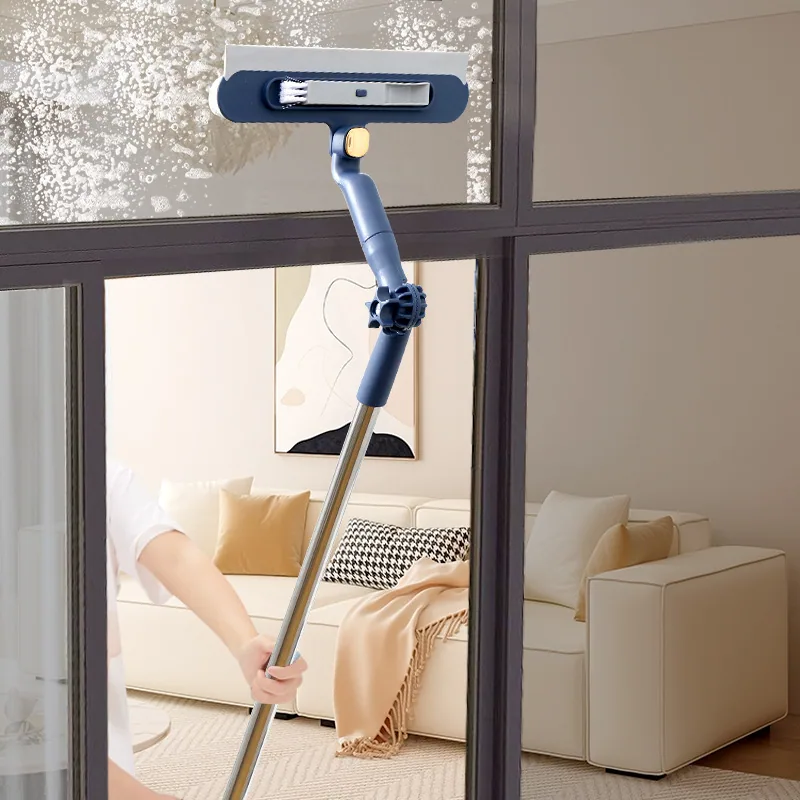
Use the category pages to build the shortlist: mops, brooms, cleaning brushes, cloths, squeegees and window tools, trash cans. Print the spec for every candidate. You will reuse those specs in step 3, and again at inspection.
Step 2: Stock or OEM? The MOQ question
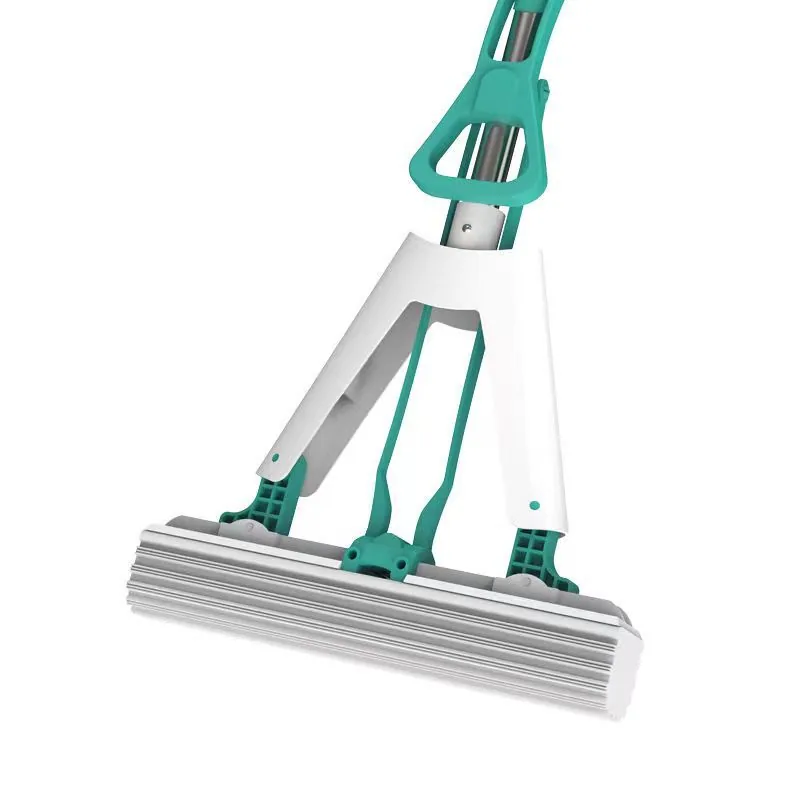
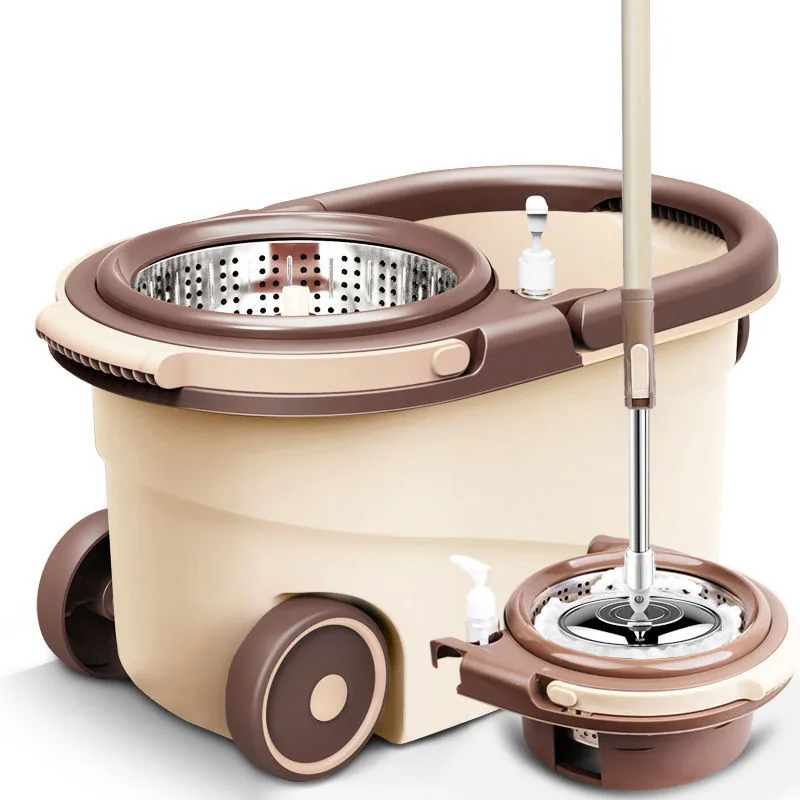
This is where most first orders get stuck, so decide early. Stock items carry their own minimum order on each listing. That figure belongs to that item only, so do not read it as a store-wide number. In our own range the spread is wide: a rotating spin mop at 200 pcs, a PVA sponge mop at 300, a telescopic window set at 500, a self-clamping cloth mop at 900, a silicone squeegee at 1,200, a bath brush at 1,400, a toilet brush at 1,600, a rocker-lid trash can at 480. A plastic broom and dustpan set sits at 5,000 sets because of how it is packed and moulded. Same supplier, very different numbers.
OEM is a different game. Custom orders run 2,000 to 8,000 pieces per style per colour, and where you land inside that band depends on the product structure, the material, the packaging format and how deep the customisation goes. A new colour is not a button press. It means separate material planning, colour matching, bristle colourways and a new packaging run.
So for a first OEM order, focus on one or two core products, one brand colour and packaging that can stretch to more items later. Buyers who try to launch twelve private-label SKUs at once usually end up with twelve compromises. See OEM/ODM for the full flow, or wholesale if you want to test the market first with stock.
Step 3: Samples, colours and packaging specs
Ask for a sample of the exact SKU, not a similar mop from another mould. A lookalike tells you nothing about handle fit, mop head weight or how the carton travels.
Then write the spec down. A workable sheet covers: handle material and tube wall thickness (in our range, reinforced stainless steel or aluminium at 0.4 to 0.6 mm); mop head material (PVA sponge, chenille microfiber, 4-ply or 8-ply cotton yarn, 80/20 polyester-polyamide microfiber pads); bristle stiffness and trim length; packed weight; carton dimensions and carton count per SKU; carton mark; inner barcode.
Colour is where overseas buyers lose the most time. Send a Pantone code or a physical colour sample, not the word "blue". Logo can be applied by embroidery, silk print or heat print. Packaging options include colour boxes, hot-stamped logos, carton marks and product labels.
For OEM, a pre-production sample is confirmed before mass production starts. Keep it, photograph it, and use it as the reference for the inspection in step 7. If the pre-production sample and the mass production run ever disagree, that sample is your evidence.
Label content deserves its own line on the sheet: language, barcode format, country of origin marking and any safety wording your market requires. Your importer of record owns that compliance call, so confirm it with your broker before the artwork is signed off, not after the cartons are printed.
Step 4: Consolidating mixed items in Yiwu
Yiwu is built for mixed orders. The Yiwu International Trade City complex is a wholesale market cluster where buyers routinely pull several categories in one trip, and a container of mops, brushes and trash cans from a single source is normal here rather than a special request.
Our showroom in District 4 runs to more than 200 square metres, and our one-stop procurement covers roughly 3,000 items across mops, brooms, brushes, rags, trash cans and window cleaners. Practically, that means a mixed order can be picked, checked and consolidated in Yiwu rather than split across three suppliers and three sets of paperwork.
Ask for two things before you confirm: carton count and CBM per SKU, and a loading plan. Mixed cartons are fine, mixed chaos is not. A loading plan tells you whether your 18 SKUs actually fit in a 20GP or whether you are 4 CBM short.
Step 5: FCL or LCL, and who books the freight
Full container load is cheaper per cubic metre and simpler at destination, but you need the volume. Less than container load means your cargo shares space with other shippers, which suits a trial order of a few hundred cartons. Road freight calls the shared-trailer version LTL; on the water it is the same shared-space idea. The container side of it is well covered in the containerization overview.
Before you compare quotes, fix the Incoterm. FOB, EXW and CIF put different jobs on your side of the table, and a "cheaper" quote is often just a quote for less work. The Incoterms reference is a decent refresher if your team is new to this.
Most first-time importers use a freight forwarder for booking, consolidation and customs coordination. Your supplier can also handle it: our export service covers order confirmation, production scheduling, quality inspection, warehousing and consolidation in Yiwu, export customs clearance, booking and shipment, for both FCL and LCL. Pick one route and make sure both sides know who is booking what.
Step 6: Documents to collect
Keep a single file per shipment. It should hold the commercial invoice, packing list, bill of lading or sea waybill, certificate of origin where your market needs one, and the product test reports the factory holds for the materials used. Add the confirmed pre-production sample photos and the inspection report. Boring file, quiet arrival.
Step 7: Inspection points before the container is sealed
Inspect at the factory, before loading, while you still have leverage. Six checks cover most of the risk.
| Check | What to look for | Why it matters |
|---|---|---|
| Appearance and colour | Colour against the approved Pantone or sample, flow lines, scratches, mismatched parts | Colour drift is the most visible complaint on shelf and the most expensive to fix after arrival |
| Assembly and fittings | Screws, rivets, clips, telescopic locks, lid hinges, bucket handles. Twist and press each one | Loose fittings become returns, and returns cost more than the unit |
| Handle fit | Handle to head connection, wobble under load, tube wall thickness | Our handles are reinforced stainless steel or aluminium at 0.4 to 0.6 mm wall thickness. Check the spec you approved, not the one you assumed |
| Bristles and mop head | Bristle stiffness and trim, yarn ply, pad weight, fibre type, tuft pull test | A soft broom sold as stiff, or the reverse, kills the repeat order |
| Packing | Inner bag, colour box print, barcode position, carton mark, tape, carton strength | Retail-ready packing is where corners get cut first |
| Quantity and carton count | Units per carton, total cartons against the packing list, seal numbers | A short count is cheap to fix at the factory and awkward everywhere else |
One more question to ask any supplier: what is your drop test, and from what height? Every product in our range has to pass a drop test before it leaves the factory. If the answer is vague, that tells you something.
How to start an order with us
Two routes. For stock, pick items from our wholesale range, each with its own minimum order on the listing, and we consolidate them in Yiwu and handle inspection, warehousing, customs clearance, booking and shipment under our export services. For OEM, read the OEM/ODM page, then send your style, target colour, logo method, packaging type, estimated annual demand and destination market.
Email mopglohome@gmail.com with your product list or category, quantity per SKU, destination port and whether you want stock or private label. Prefer a form? Use the quote request on our contact page. Either way, include your target retail price. It shapes the spec conversation more than anything else you can tell us.
FAQ
What is the MOQ for importing cleaning products from China?
It depends on the item and the route. Stock items each carry their own minimum on the listing, and the spread inside one supplier's range can be wide, from a couple of hundred pieces on a mop to several thousand sets on a broom and dustpan set. OEM orders typically run 2,000 to 8,000 pieces per style per colour, depending on structure, material, packaging and customisation depth. Always ask for the MOQ of the exact SKU, not the store average.
Should my first order be FCL or LCL?
If you are testing 15 to 25 SKUs, LCL usually makes sense because you are not paying for empty space. Once your volume is predictable and close to a container, FCL is cheaper per cubic metre and simpler at destination. Whichever you choose, agree the Incoterm before comparing freight quotes, and confirm who books the space.
Can I mix mops, brushes and trash cans in one order?
Yes. Mixed category orders are routine in Yiwu, and consolidation is one of the practical reasons buyers source there. Ask for carton count and CBM per SKU plus a loading plan, so you know the mix fits the container you are paying for.
How do I check quality before the container ships?
Inspect at the factory, before loading. Cover appearance and colour against the approved sample, assembly and fittings, handle fit, bristle or mop head quality, packing and carton marks, and quantity against the packing list. Ask what drop test the supplier runs. For OEM, hold the confirmed pre-production sample as the reference.